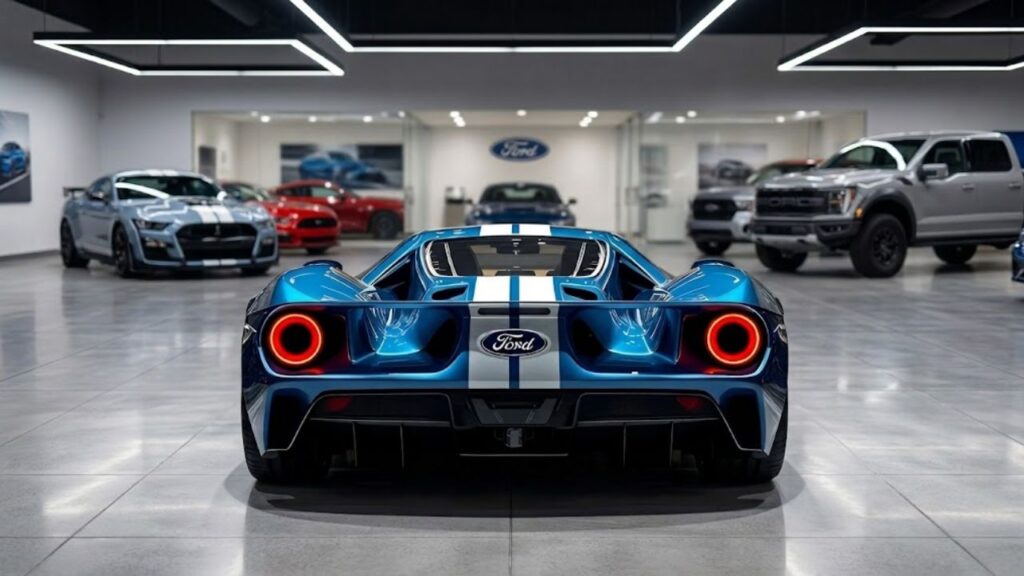
The Ford GT40 stands among the most iconic race cars ever created, a machine that reshaped the history of motorsport. Built with the clear objective of dominating endurance racing, it brought together immense power, refined aerodynamics, and forward-thinking engineering. Even decades after its success on the track, the GT40 continues to symbolize a defining era of competition and innovation. Its journey reflects not just performance, but also determination, rivalry, and breakthrough development in automotive engineering.
The Origin of a Motorsport Challenger
In the early 1960s, endurance racing was largely controlled by European brands, with Ferrari leading the competition. Ford set out to challenge this dominance by initiating an ambitious program aimed at winning the 24 Hours of Le Mans. This effort resulted in the creation of the GT40, developed by a skilled team that included Carroll Shelby.
Unlike conventional road cars, the GT40 was engineered entirely with racing in mind. Every detail, from the chassis structure to the engine placement, was designed to endure long-distance competition. What started as a bold attempt soon evolved into one of the most successful projects in racing history.
 Ferrari 488 Pista Launched with Track Focused Power, Premium Design and Racing Performance Features
Low Stance Design Focused on Performance
The GT40’s design became instantly recognizable due to its extremely low height of just 40 inches, which also inspired its name. This low profile significantly reduced air resistance, allowing the car to maintain higher speeds on straights.
Its wide body, extended front section, and compact rear created a balanced yet aggressive appearance. Lightweight construction improved both acceleration and handling. Each design element served a purpose, whether for cooling, airflow management, or stability. Even today, its silhouette remains a benchmark in automotive design.
High Performance V8 Powertrain
At its core, the GT40 was powered by a robust V8 engine built for endurance racing. Early versions featured a 4.7 liter unit, while later models adopted a larger 7.0 liter engine capable of delivering remarkable power.
This setup enabled the car to reach speeds beyond 320 kilometers per hour while maintaining consistent performance. More importantly, the engine was designed for durability, capable of handling the extreme demands of long races. Its balance of power and reliability made it a serious competitor on the global stage.
Engineered for Long Distance Racing
The GT40 was specifically developed for endurance events rather than short bursts of speed. Its mid engine layout improved weight distribution, enhancing stability and control during high-speed cornering.
Carefully tuned suspension, strong braking systems, and durable mechanical components ensured reliable performance over extended periods. This combination of speed and endurance gave the GT40 a significant advantage in demanding race conditions.
Minimalist and Driver Focused Interior
Inside the GT40, the cockpit was designed purely for racing efficiency. It featured lightweight seating, essential instrumentation, and a compact steering wheel for precise handling.
 Chevrolet 2026 Nova Launches with Powerful Engine, Premium Interior and Advanced Driving Features
Drivers were positioned low within the chassis, surrounded by gauges that provided real-time performance data. The stripped-down interior minimized distractions, allowing full concentration during high-speed racing conditions.
Legendary Success at Le Mans
The GT40 cemented its legacy at the 24 Hours of Le Mans. In 1966, it achieved a historic victory by securing first, second, and third positions, marking a turning point in motorsport history.
Following this achievement, the GT40 dominated the race for four consecutive years from 1966 to 1969. These victories demonstrated that American engineering could successfully challenge and outperform established European competitors.
Impact on Modern Ford Performance Cars
The influence of the GT40 can still be seen in modern Ford supercars. The later Ford GT models were developed as a tribute to the original, incorporating advanced materials, aerodynamics, and technology.
Despite these advancements, the core philosophy remains unchanged—combining performance, innovation, and racing ambition. The GT40 continues to inspire Ford’s approach to high-performance engineering.
A Lasting Symbol of Automotive Excellence
Today, the Ford GT40 is far more than a historic race car. It represents ambition, innovation, and competitive spirit. Original models are highly valued and remain among the most sought-after collector vehicles.
Enthusiasts and historians admire the GT40 not only for its victories but also for its role in transforming motorsport. It stands as a reminder of how determination and engineering excellence can create something truly timeless.
Conclusion
The Ford GT40 remains one of the most influential race cars ever built. With its powerful V8 engine, aerodynamic efficiency, and unmatched endurance racing success, it changed the landscape of motorsport. Even today, it continues to inspire future generations, proving that innovation and passion can leave a lasting legacy.