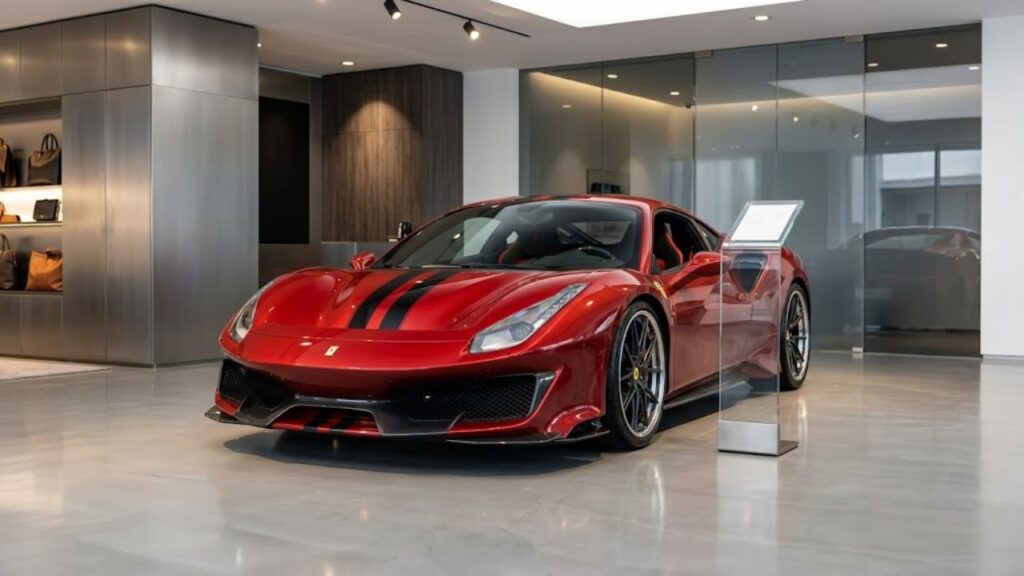
The Ferrari 488 Pista stands among the most extreme performance-focused machines ever created by Ferrari. Developed with strong influence from the brand’s racing division, the Pista delivers a driving experience that closely mirrors that of a professional track car. The name “Pista,” meaning “track” in Italian, perfectly represents its purpose. Every element of the car, from its aerodynamic structure to its powerful engine, is engineered to maximize speed, precision, and driver involvement.
Ferrari introduced the 488 Pista as a lighter and more performance-oriented evolution of the 488 GTB. The objective was to create a car capable of delivering exceptional results on both racetracks and public roads. By combining advanced aerodynamics, a high-output turbocharged engine, and intelligent handling systems, the Pista quickly became one of the most celebrated supercars of its era.
Design Focused on Aerodynamic Efficiency
The exterior design of the Ferrari 488 Pista is driven primarily by performance needs rather than aesthetics alone. Each vent, curve, and surface is carefully engineered to improve airflow and enhance aerodynamic performance.
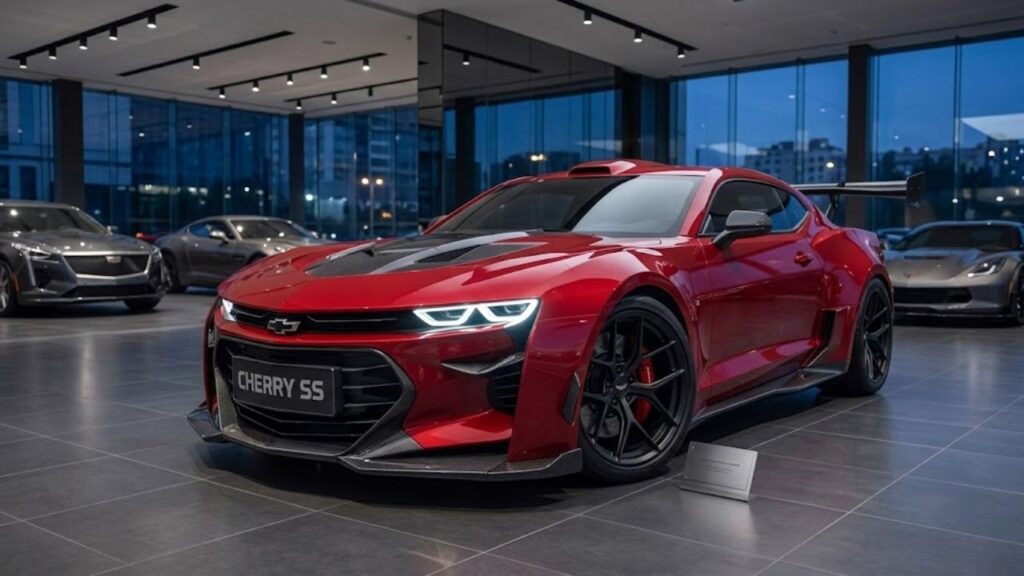
 Chevrolet 2026 Nova Launches with Powerful Engine, Premium Interior and Advanced Driving Features
A standout feature is the front S-Duct system, which channels air through the hood and over the car to increase front-end downforce and stability at high speeds. Enlarged front air intakes improve cooling for both the engine and braking system, while sculpted side panels guide airflow efficiently toward the rear.
At the rear, a large diffuser and integrated aerodynamic structures work together to generate additional downforce. These elements ensure the car remains stable and planted even during high-speed driving conditions.
Powerful Twin-Turbocharged V8 Performance
At its core, the Ferrari 488 Pista is powered by a 3.9-liter twin-turbocharged V8 engine that produces approximately 710 horsepower. This engine delivers rapid throttle response and exceptional acceleration, thanks to refined airflow and lightweight internal components.
Paired with a fast-shifting dual-clutch transmission, the Pista achieves 0 to 100 km/h in under three seconds. This places it among the quickest production cars of its time, offering a thrilling combination of speed and responsiveness.
Lightweight Engineering Approach
Reducing weight was a major priority in the development of the Ferrari 488 Pista. Engineers removed unnecessary mass while reinforcing critical structural areas, resulting in a significantly lighter car compared to the standard 488 GTB.
Carbon fiber is extensively used across multiple components, including the bumpers, engine cover, and interior elements. Lightweight wheels, thinner glass, and a redesigned exhaust system further contribute to weight reduction.
This lighter construction improves acceleration, braking performance, and agility, allowing the car to respond more quickly during dynamic driving situations.
Motorsport-Inspired Handling and Control
The Ferrari 488 Pista is engineered to deliver precise and confident handling, especially at high speeds. The suspension system is tuned for increased stiffness and improved feedback, allowing drivers to feel more connected to the road.
An advanced system known as Side Slip Control continuously monitors traction and stability. It adjusts power delivery and braking inputs in real time, helping maintain control during aggressive cornering while still allowing experienced drivers to push the car to its limits.
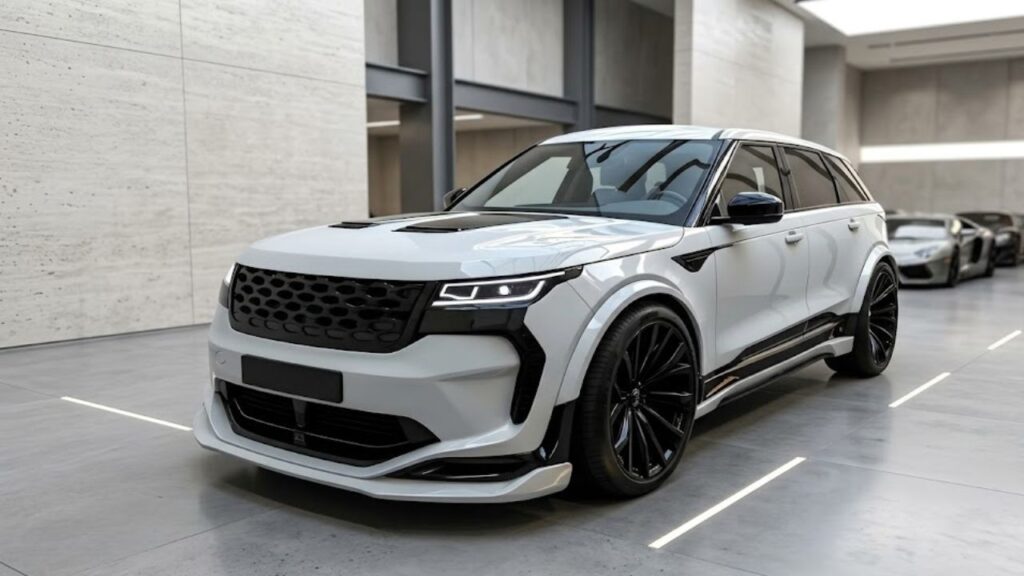
 Range Rover Sport 2026 Launch Brings Bold Styling, Advanced Features and Premium Driving Experience
The steering is highly responsive, enabling precise inputs and enhancing driver confidence on both roads and racetracks.
Advanced Aerodynamic Performance
Aerodynamics play a critical role in the Pista’s performance capabilities. Ferrari utilized knowledge from its racing programs to develop a body that produces significantly more downforce than the standard 488 GTB.
The combination of the S-Duct, optimized side intakes, and an enlarged rear diffuser ensures efficient airflow management. This results in improved grip, enhanced cooling, and greater stability at high speeds.
Driver-Centric Interior Design
Inside the Ferrari 488 Pista, the focus is clearly on performance rather than luxury. The cabin features lightweight materials such as carbon fiber and Alcantara, creating a purposeful and race-inspired environment.
Deeply contoured bucket seats provide strong support during high-speed cornering. The steering wheel integrates essential controls, allowing the driver to make adjustments without distraction.
Large paddle shifters positioned behind the wheel enable quick gear changes, giving the driver complete control over the vehicle’s performance.
Key Specifications of Ferrari 488 Pista
| Specification | Details |
|---|---|
| Engine | 3.9L Twin-Turbocharged V8 |
| Power Output | 710 Horsepower |
| Transmission | 7-Speed Dual-Clutch Automatic |
| 0-100 km/h | Under 3 Seconds |
| Drive Type | Rear-Wheel Drive |
| Body Material | Carbon Fiber and Lightweight Alloys |
Legacy and Enthusiast Value
The Ferrari 488 Pista continues to hold a strong position in the supercar world even years after its release. It is widely appreciated for its blend of advanced engineering, extreme performance, and racing-inspired character.
Collectors value the model for its limited production and its importance within Ferrari’s V8 lineup. It represents a significant stage in Ferrari’s evolution, where turbocharged performance and lightweight design came together to create an exceptional driving machine.
Conclusion
The Ferrari 488 Pista is a perfect example of how racing technology can be successfully adapted for road use. With its powerful engine, advanced aerodynamics, and lightweight construction, it delivers an extraordinary driving experience.
Built with precision and inspired by motorsport expertise, the Pista remains a symbol of Ferrari’s commitment to performance, innovation, and driving excellence.