Random acts of kindness are never truly random. They are quiet, intentional choices made by people who notice what others need before a word is spoken—and who act without expecting recognition.
In 2026, when life feels faster and louder than ever, these small acts of humanity are more than just touching moments—they are proof that genuine happiness often comes from giving, not receiving. These stories show how compassion, when practiced consistently and quietly, leaves a lasting imprint on every heart it reaches.
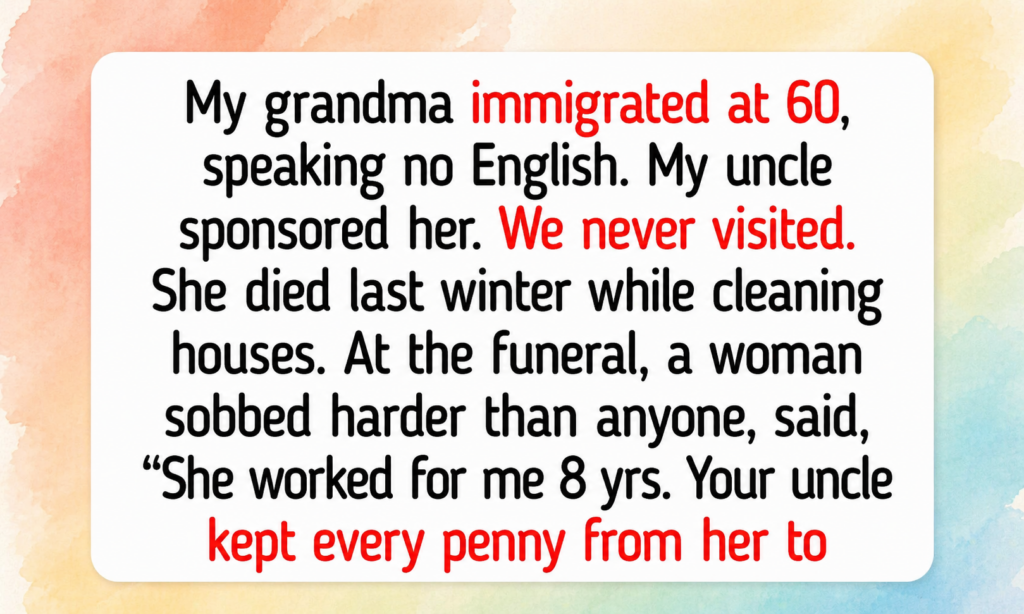
My grandmother moved to a new country at 60 without knowing the language. My uncle sponsored her, but we rarely visited, and she spent her final years cleaning houses in a place where few people even knew her name. She passed away last winter.


At her funeral, one woman cried more than anyone else. She shared that my grandmother had worked for her for eight years. Then she revealed something none of us knew—my uncle had been saving every bit of my grandmother’s earnings, secretly, because she had always dreamed of returning to her homeland before she died.
For eight years, she spoke about going back while she worked. And for two of those years, that same woman had been quietly contributing money to help make it possible.
She never made it home. But two people had spent years trying to make her dream come true—without ever telling her.
My father had a stroke at 67. Losing his license took away more than mobility—it took his independence, something he had built his entire life around.
A retired driving instructor from his workplace, someone who barely knew him, started showing up every Tuesday. No announcement, no timeline—just a quiet commitment. He drove my father wherever he needed to go for four years, never accepting anything in return.
When I asked him why, he seemed puzzled.
“Your father always had somewhere to be. I just made sure he could get there.”
And just like that, he gave my father back a sense of purpose—one Tuesday at a time.
My mother once spent six weeks in a hospital room facing a brick wall. She told me the hardest part wasn’t the discomfort—it was not being able to see the sky.
A nurse overheard her say that.
The very next morning, my mother was moved to a smaller, less convenient room—but one with a window overlooking a park. The nurse had arranged it quietly, without mentioning it.
For six weeks, my mother watched people walking, seasons shifting, life continuing. She later told me that view gave her hope.
Because sometimes, healing begins with having something to look forward to.

When we moved into our first home, an elderly neighbor knocked on our door with a pot of soup and a handwritten recipe.
She said she had done this for every new family on the street for 30 years. When she first moved somewhere new, a stranger had done the same for her—and it made her feel like she belonged.
She didn’t stay long. She didn’t ask for anything. She simply passed on the kindness.
She passed away two years later.
Since then, we’ve continued her tradition. Every new neighbor gets that same soup and the same recipe card.
Because some acts of kindness are meant to be carried forward.
I’m a nurse, and months after one patient was discharged, I received an envelope in the mail.
Inside was a photograph taken from her hospital window—the morning she was finally told she could go home. On the back, she had written:
“This was the best morning I’ve had in two years. I wanted the person who helped me get here to have it.”
I don’t know how she found my address. I didn’t ask.
That photo now hangs on my wall. On the hardest days, it reminds me why I do what I do.
Growing up, my parents hid their financial struggles well. We didn’t realize how difficult things were until much later.
My mother eventually told me that during the hardest time, an envelope appeared in our mailbox every month with enough cash to cover school lunches—for 18 months.
It stopped just as quietly as it began.
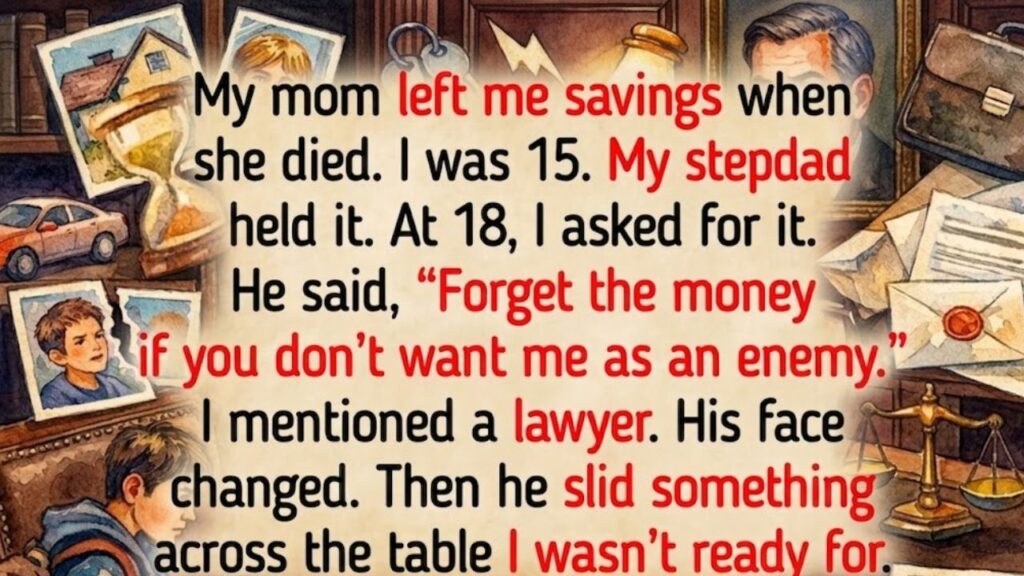
 My Stepdad Managed My Mom’s Savings After She Died — At 18 I Finally Asked for Every Penny
We never found out who did it. But it had to be someone close—someone who saw everything and chose to help without ever being known.

That kind of kindness doesn’t just help—it holds people together when they’re close to falling apart.
The day I brought my first baby home, my mother-in-law showed up early in the morning.
Our relationship had always been complicated, so I wasn’t expecting comfort.
But she took the baby gently, told me to sleep, and spent the entire day handling everything in the house. She came back the next day and did the same.
No conversations. No past issues. Just action.
By the end of the week, something between us had changed.
Because sometimes the most powerful connections are made without words.
When I was trying to rent my first apartment, I kept getting rejected. No rental history, no guarantor, and a complicated background made it difficult.
Then a former landlord—someone I had only rented from briefly—wrote me a detailed, thoughtful reference letter without being asked.
It was so genuine that the next landlord approved me almost immediately.
I’ve been living here for six years now.
Because sometimes, someone takes the time to open a door you couldn’t open alone.
My son had always been afraid of the ocean. On vacation, he would stand at the edge, watching but never going in.
One day, my father-in-law stood beside him and said quietly,
“I was scared too when I was your age.”
Then he walked into the water and stood there—silent, waiting.
Four minutes later, my son followed.
They swam together for an hour. And just like that, the fear was gone.
Because courage is often learned by watching someone else be brave first.
My brother made a serious mistake in his twenties that led to court.
On the day of sentencing, a woman we barely recognized stood up to speak. She had once employed him years ago.
She told the judge about his character—specific, honest observations about who he had been before everything went wrong.
She had nothing to gain. She simply believed someone should speak the truth about him.
The judge acknowledged her words.
My brother has spent every year since trying to live up to what she saw in him.
Because being seen at your worst—and still being spoken for—can change the course of your life.