Some managers assume that controlling someone’s paycheck gives them the right to control how they’re treated. They confuse leadership with dominance and loyalty with silence. What they overlook is that employees notice everything. And often, the quietest person is the one observing with the most precision. This is one such story.

I work full-time at a mid-level company where things are often disorganized. Work-life balance barely exists, and overtime feels routine. Still, I liked my team, performed well, and avoided unnecessary conflict.

Then one day, my manager Daniel emailed saying three of us had to travel to Austin for a client meeting with just two days’ notice. I packed quickly, assuming accommodation was already arranged.
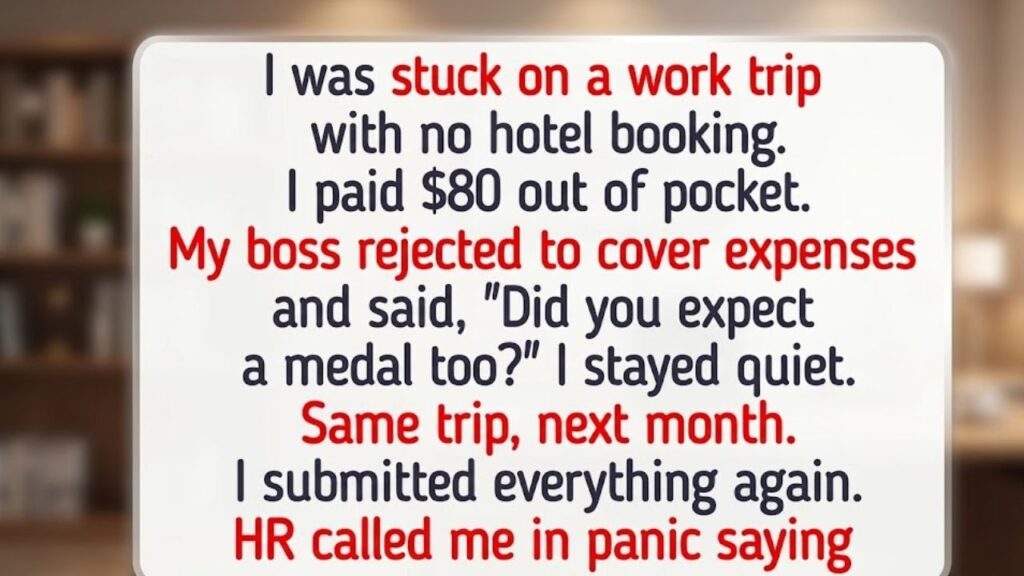
When I arrived, there was no booking under my name. I tried calling Daniel but got no response. After waiting, I paid $80 myself, documented everything carefully, and moved on assuming it would be reimbursed.
Back at work, I submitted the expense report with receipts. Daniel rejected it and, in front of others, made a sarcastic comment about me expecting recognition. That moment changed something inside me. I returned to my desk and began recording everything — dates, times, exact words. I reviewed company policies and spoke to someone experienced in HR. Their advice was simple: keep documenting.

So I did.
A month later, I had to travel again. This time, Daniel told me to handle everything myself. I agreed, arranged all bookings properly, and saved every receipt. When plans changed without informing me, I ended up eating alone, reflecting on what professionalism really means.
After returning, I submitted my report and went directly to Patricia in HR. She reviewed everything carefully and asked how long this had been happening. My answer was simple: long enough.
A few days later, she confirmed that my reimbursements would be processed and that management changes were underway. My report had uncovered more issues than expected. By the end of the month, Daniel was removed from his position, and my expenses were returned.

But things didn’t feel resolved.
Some coworkers reacted differently. One reminded me of his personal responsibilities, another distanced themselves, and someone suggested I should have ignored it. For a brief moment, I questioned myself. The guilt felt real, even though I knew the situation wasn’t fair.

I still wonder if I handled it correctly. My family believes I did, but sometimes it doesn’t feel like a clear victory. It feels complicated.

Thank you for trusting us with your experience. Feeling conflicted after making a difficult decision doesn’t mean you were wrong. It reflects your empathy and awareness.
Here are three important perspectives to consider:
Guilt after doing the right thing is normal.
What you’re experiencing is often described as a moral conflict, where the right decision still carries emotional weight. It doesn’t indicate a mistake — it shows strong values and genuine integrity.
Your actions likely helped others.
When one person speaks up with clear evidence, it often creates space for others to come forward. Your documentation wasn’t just for you — it contributed to broader accountability and improved fairness.
Staying silent also has consequences.
Ignoring unfair treatment may feel easier in the moment, but over time it can lead to stress and dissatisfaction. Speaking up, while difficult, protects both personal well-being and workplace standards.
In situations like this, doing what is right doesn’t always feel comfortable. But discomfort doesn’t equal wrongdoing. Sometimes it’s simply the cost of acting with honesty and standing by your principles.